


Course Title: Extinctions: Past, Present & Future
[If you are interested in selecting this course, please go to the NJU Course Selection System and search by the course name (Extinctions: Past, Present and Future) or the course number (15070250).]
Course Introduction
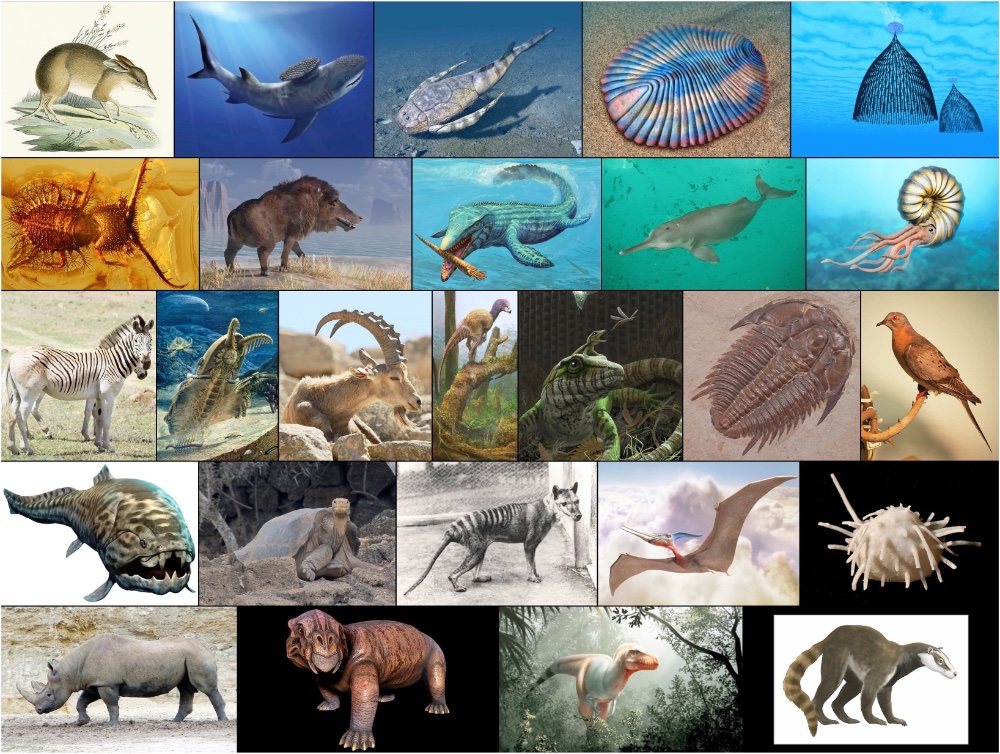
Extinction is one of the hottest topics in contemporary society, politics and science; and one of the most misunderstood. Current surveys suggest that some 1.3 million named species are known to exist on Earth with an estimated total diversity of over 8 million. In addition to maintaining themselves in the face of natural short-term and long-term environmental changes, these species must now cope with changes to their local environments, and to the global climate, that have come about as a result of the presence and activities of human societies. Without doubt the extinction of many species has taken place as a result of this activity. Moreover, species extinctions represent serious social and economic threats because human societies depend on the existence of life to provide many services that cannot be provided by non-natural processes.
However extinction is not a completely negative aspect of the natural world. Extinction is a natural process that has existed for literally billions of years. Not only is extinction predicted by evolutionary theory, it plays a key role in promoting biological diversification. Indeed, few of the animals, plants and microorganisms conservationists wish to protect would exist if it were not for the influence past extinctions have had on evolutionary processes. What is the history of extinction? When and why did major extinction events happen in the Earth’s past? What can the study of extinction reveal about how our planet achieved its current physical, climatic and biological states? And how can past extinctions guide us in formulating a pragmatic response to our contemporary climate-change situation?
These, along with many other aspects of this fascinating subject, will serve as the focus of this course which will equip students to think critically about this topic and its relation to many pressing contemporary issues (e.g., climate change, conservation, economic development, pollution). The course is taught by Prof. Norman MacLeod who has been involved directly in extinction-related research for over 30 years and who has authored or co-authored many peer-reviewed technical reports and reviews of extinction research, along with several major books on the subject, including The Cretaceous-Tertiary Mass Extinction: Biotic and Environmental Changes (1986, w/ Prof. G. Keller), Extinctions, Grzimek’s Animal Life Encyclopedia: Second Edition (2 volumes, 2013), The Great Extinctions: What Causes Them and How They Shape Life (2013).
Syllabus
Week 1 – Low Enrollment, No Class
Week 2 – Course Introduction; Introduction To Extinction – (Part I)
Week 3 – Introduction To Extinction – (Part II)
Week 4 – Introduction To Extinction- (Part III); History of Extinction Studies (Part I)
Week 5 – History of Extinction Studies (Part II); Evolution, Time, Fossils (Part I)
Week 6 – Evolution, Time, Fossils (Part II), Origin of Earth & Life, Precambrian Extinctions
Week 7 – Vendian Life & Extinctions; Cambrian Life & Extinctions
Week 8 – Mid-Term Examination
Week 9 – Ordovician Life & Extinctions, Silurian Life & Extinctions
Week 10 – Devonian Life & Extinctions, Carboniferous Life & Extinctions
Week 11 – Permian Life & Extinctions, Triassic Life & Extinctions
Week 12 – Triassic Life & Extinctions, Cretaceous Life & Extinctions (Part I)
Week 13 – Cretaceous Life & Extinctions (Part II)
Week 14 – Paleogene Life & Extinctions, Neogene Life & Extinctions
Week 15 – Quaternary Life & Extinctions, Modern Life & Extinctions
Week 16 – The Current & Future Biodiversity Crisis
NJU Finals Week – Final Examination
Course Resources
 MacLeod NJU Courses Site

